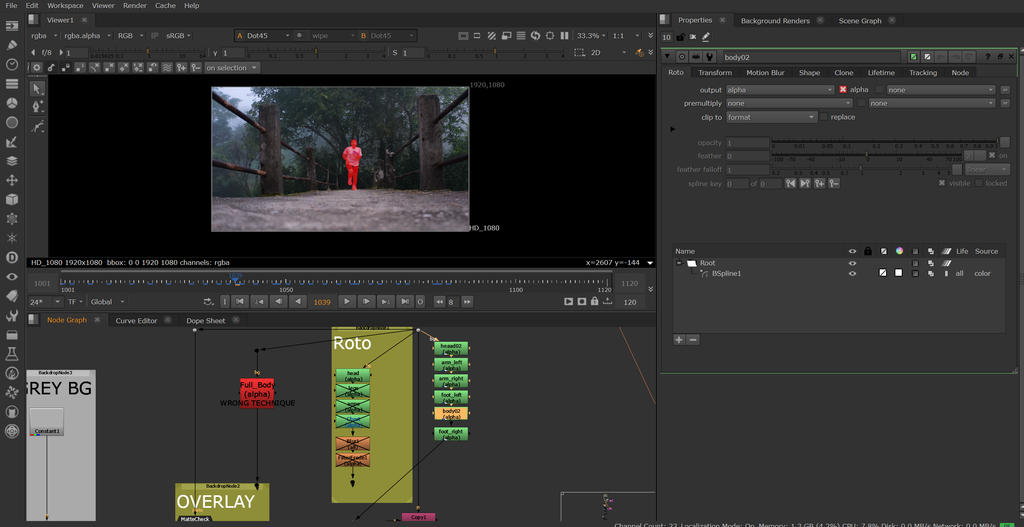
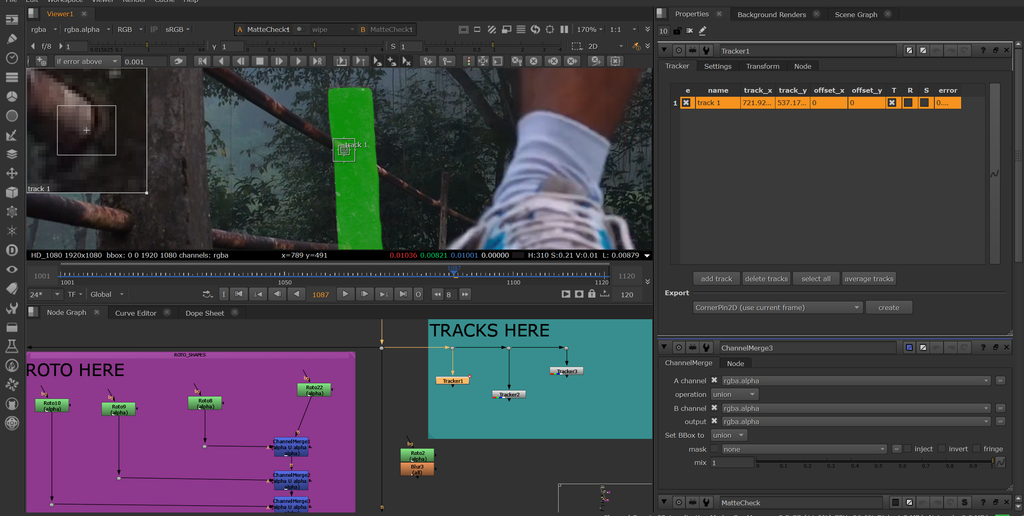
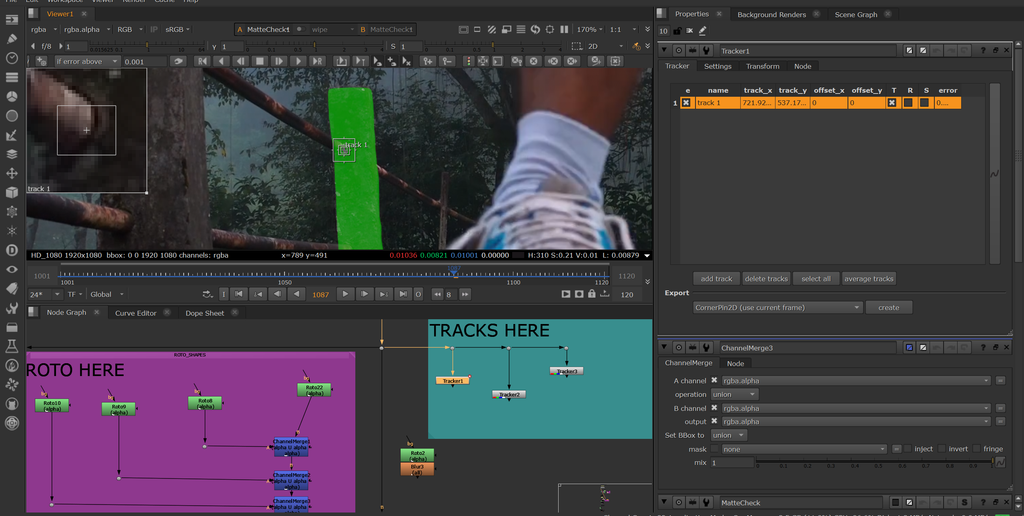
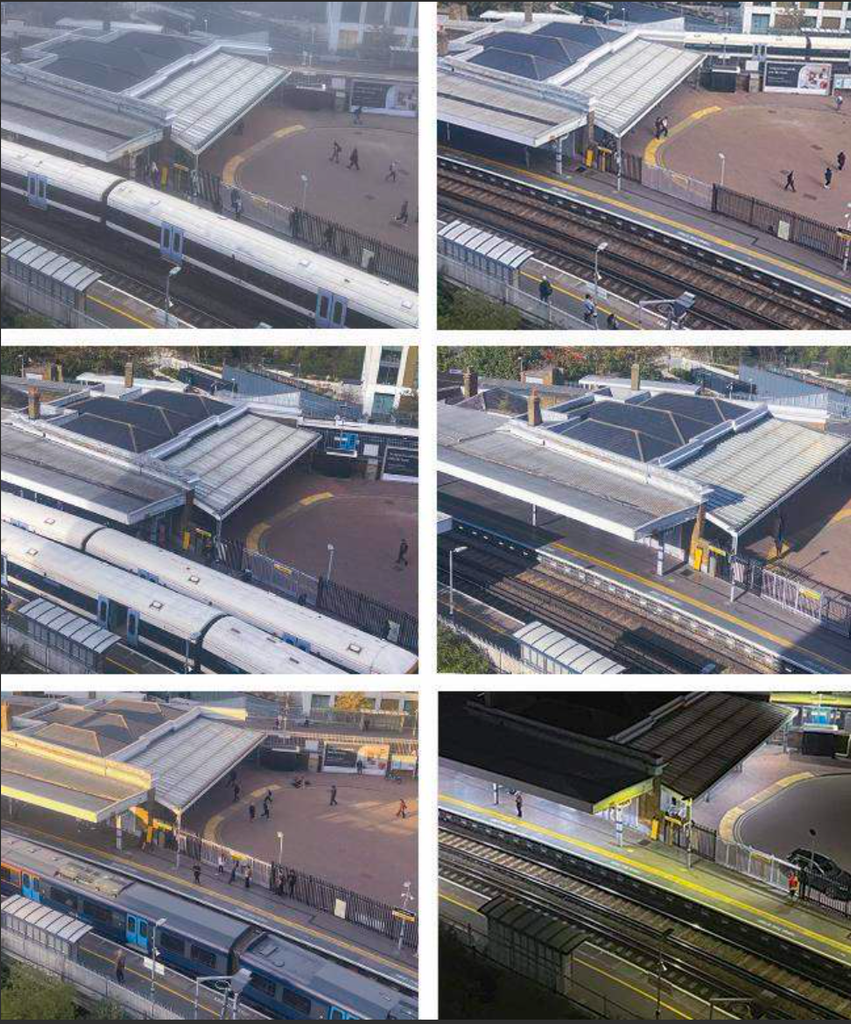
This lesson made me realize that rotoscoping is not simply drawing masks along the edges of an object; it requires continuously observing the object’s movement, changes in shape, and spatial relationships over time. Since my undergraduate background is in visual communication design, I had already worked with masks and cutouts in Photoshop. However, compared with static images, rotoscoping in Nuke is more about continuity and stability, and I also came to understand the relationship between tracking and rotoscoping: tracking is responsible for making replacement footage follow the object’s movement, while rotoscoping handles occlusions and visible areas, ensuring that different visual elements form the correct foreground-background relationships.
HOMEWORK