Author: Jiaying Chen

  • Rotoscoping – Learning Reflection

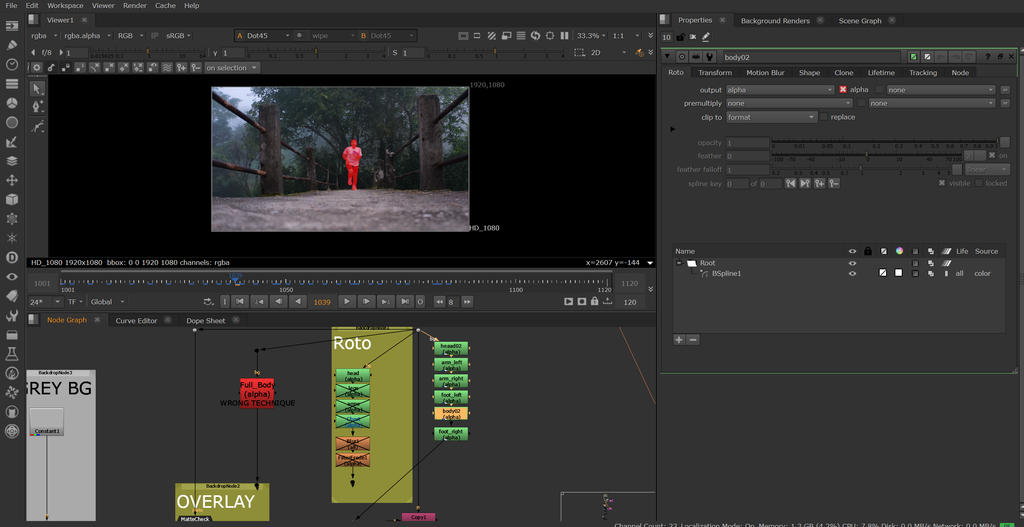
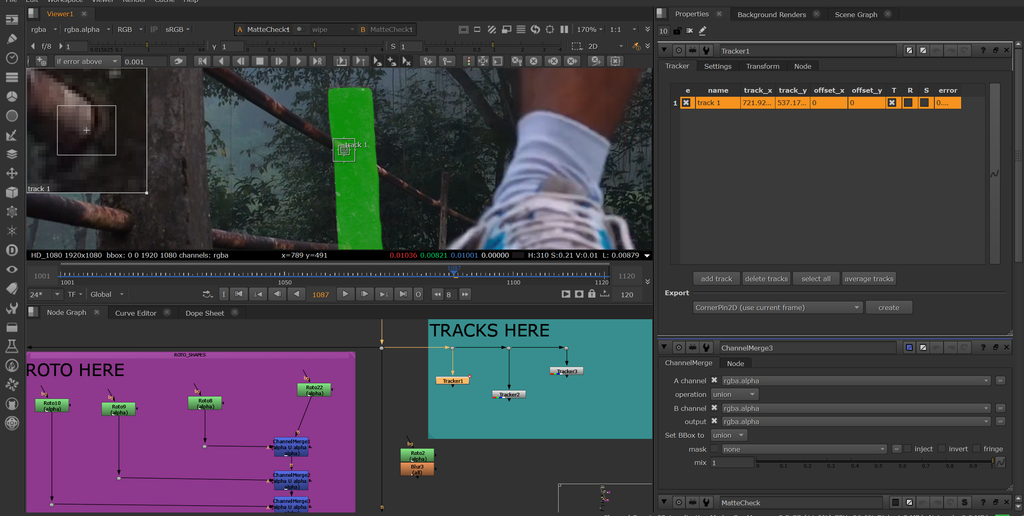
    This lesson made me realize that rotoscoping is not simply drawing masks along the edges of an object; it requires continuously observing the object’s movement, changes in shape, and spatial relationships over time. Since my undergraduate background is in visual communication design, I had already worked with masks and cutouts in Photoshop. However, compared with static images, rotoscoping in Nuke is more about continuity and stability, and I also came to understand the relationship between tracking and rotoscoping: tracking is responsible for making replacement footage follow the object’s movement, while rotoscoping handles occlusions and visible areas, ensuring that different visual elements form the correct foreground-background relationships.

    JiayingChen.mp4

  • Digital Compositing – Software, VFX Pipeline and Career Roles

    This lesson expanded my understanding of the VFX industry from learning individual software to the complete production pipeline and career development, and I also learned that Nuke, After Effects, and Fusion each serve different creative needs.

  • Cinematography Foundations II – Learning Reflection

    In this lesson, we learned about composition, camera movement, lighting, and color. These are not merely technical tools, but also a visual language for conveying narrative information and emotional experience. We came to understand that cinematography must take into account three-dimensional space, changes over time, the physical properties of light, and the audience’s emotional experience.

    ‘Commuting’ projects: 5 to 7 videos, maximum 15 seconds long.

    Jiaying Chen.mp4

  • Cinematography Foundations – Learning Reflection

    This lesson, which explored how images are formed through light, lenses, and camera settings, made me realize that visual effects are not merely the manipulation of digital images, but are grounded in the optical principles of real photography.
    In my future work with Maya and Nuke, I hope to move beyond simply relying on the software’s default settings and instead consciously control focal length, depth of field, motion blur, and color temperature, so that these techniques not only serve the realism of the image but also become tools for visual storytelling and emotional expression.

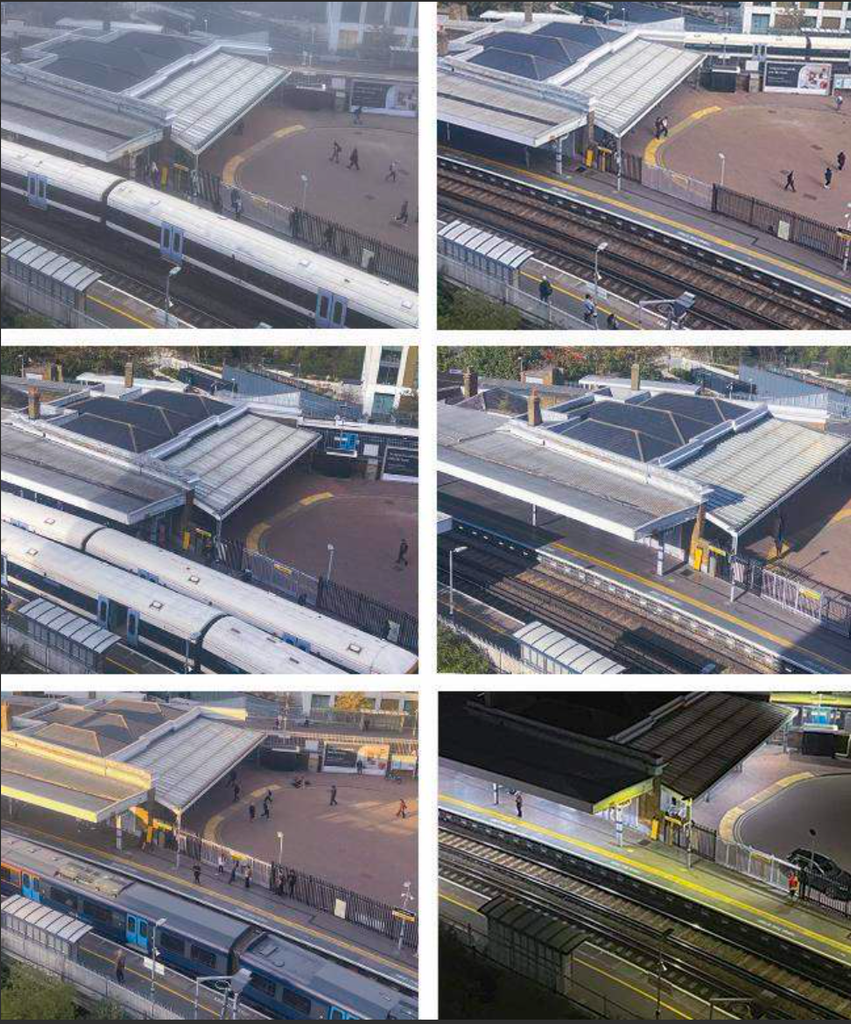
    ‘Time’

    Shoot the train station near home at different times of the day.

  • Weekly Reflection 5

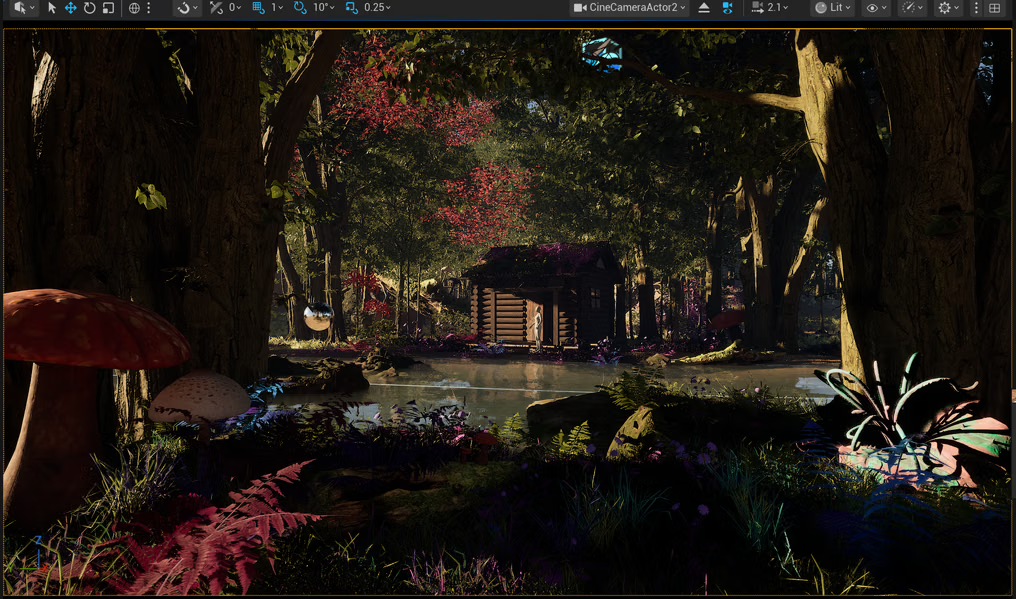
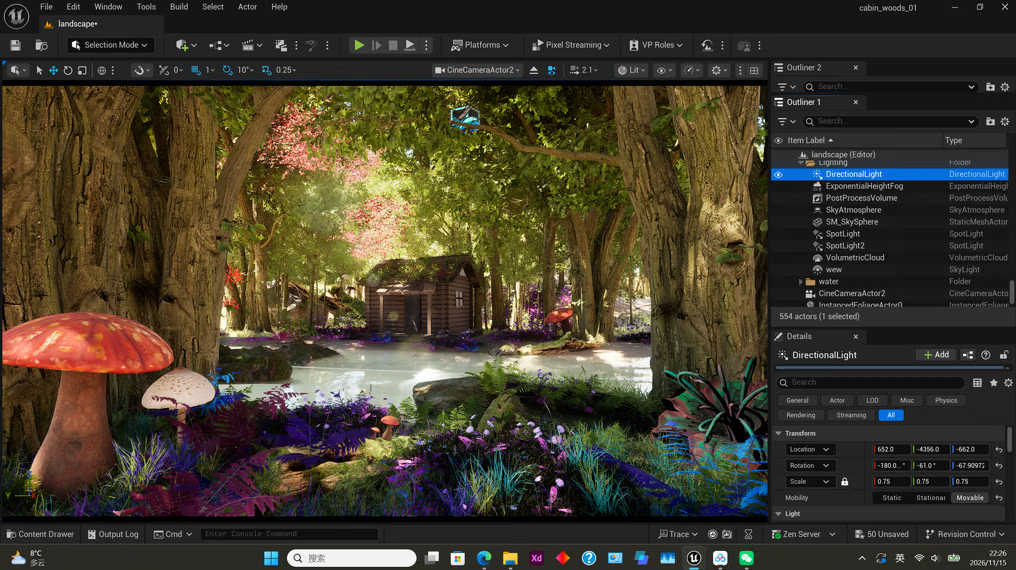
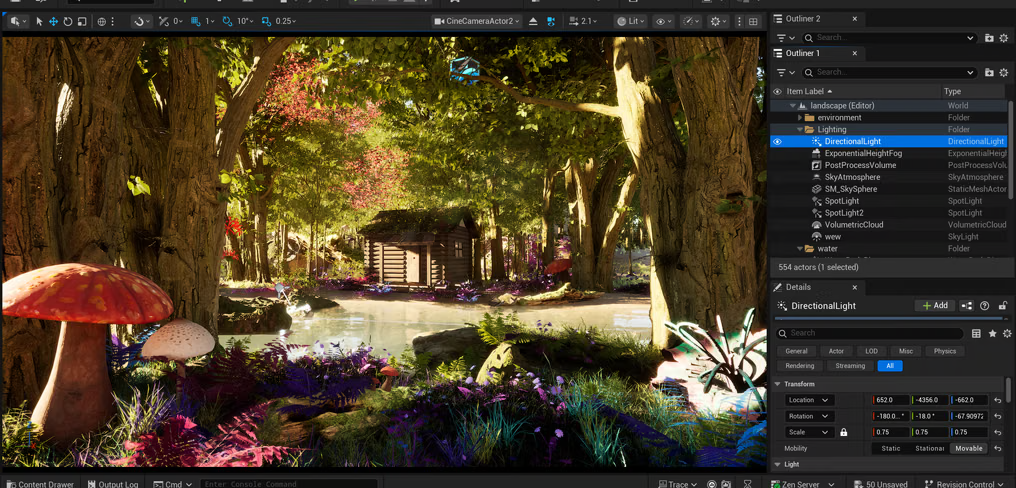
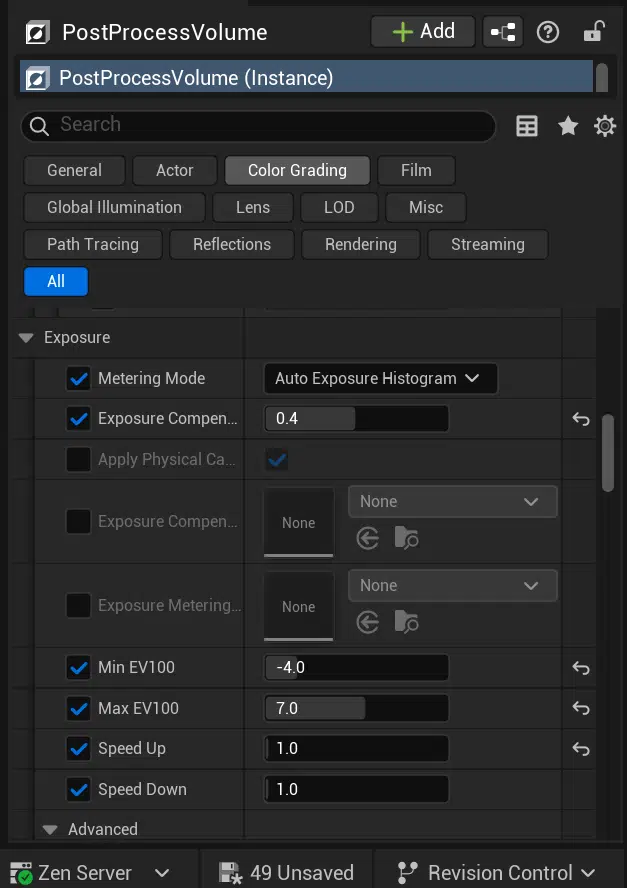
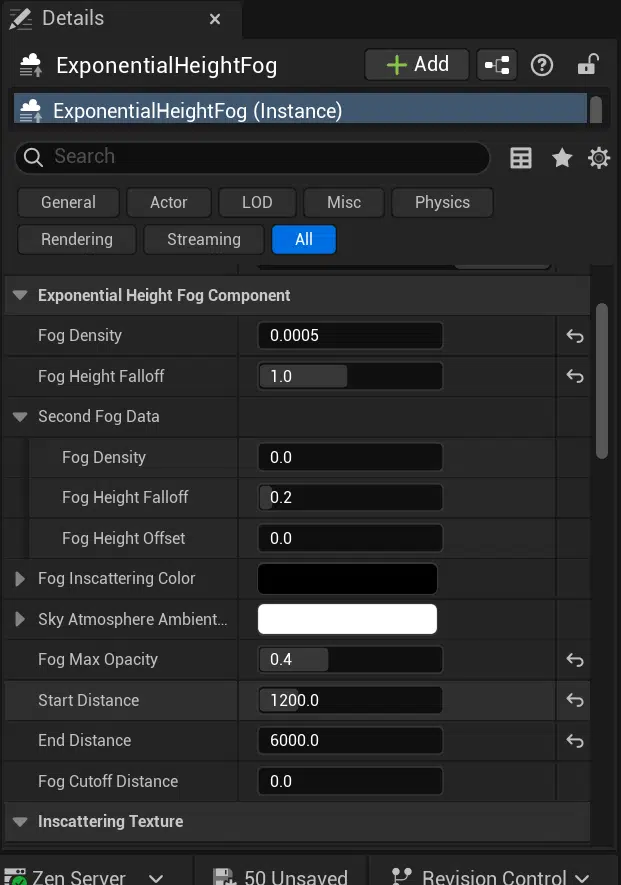
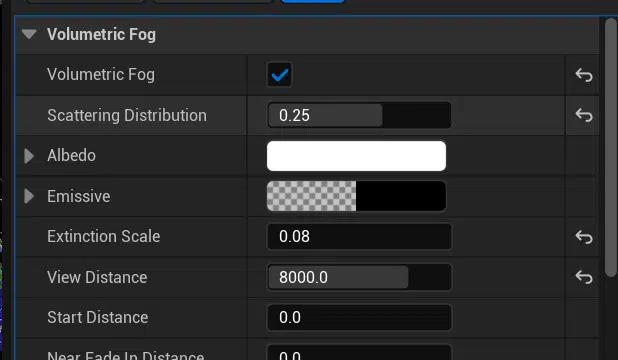
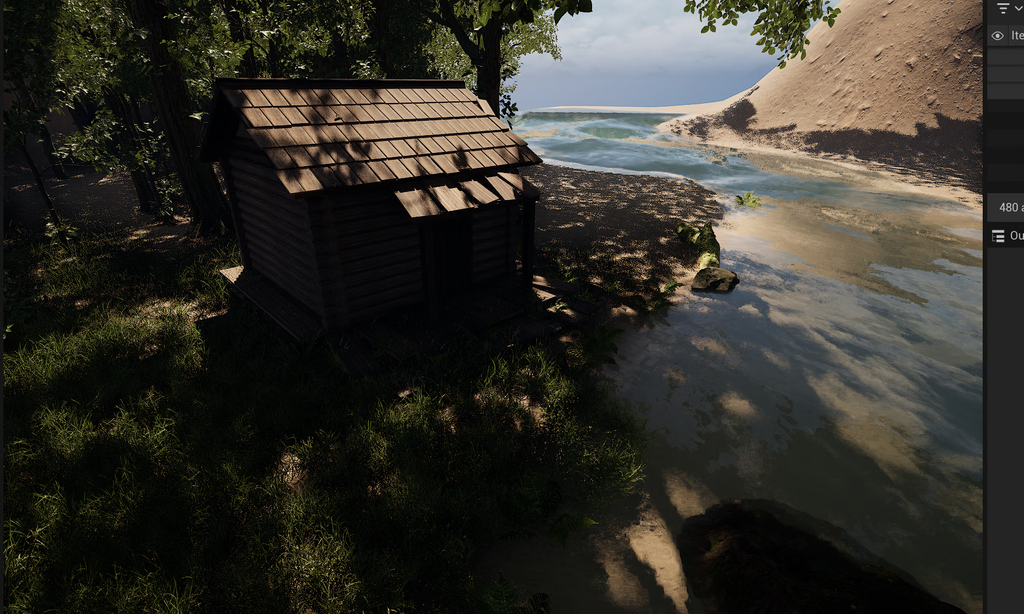
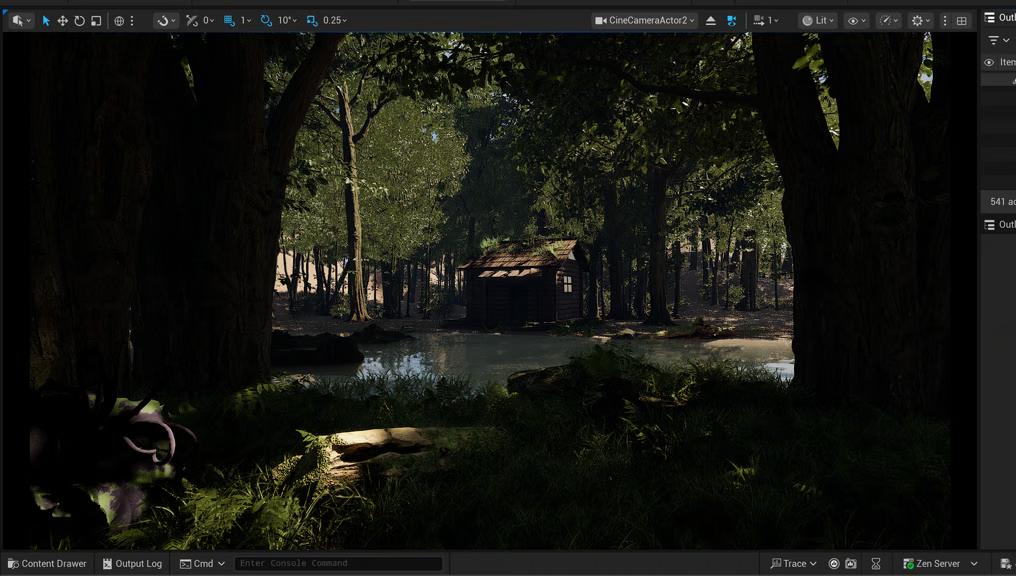
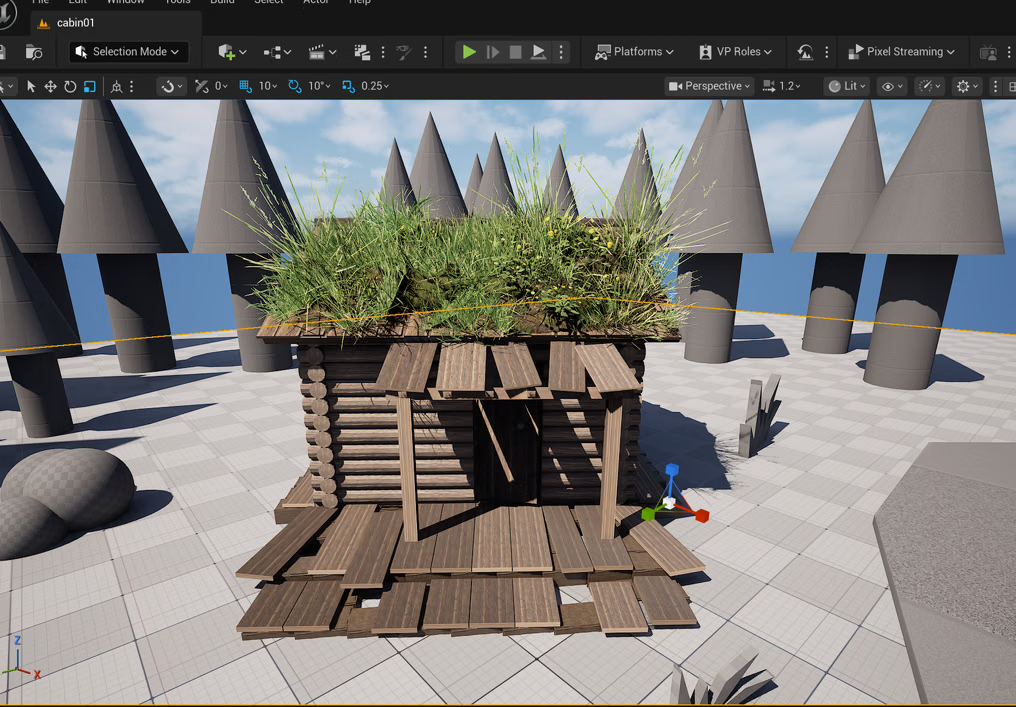
    After the lighting course, I set up and tested the scene lighting. By adjusting the DirectionalLight, PPV, and ExponentialHeightFog, I first set the scene lighting to a midday sun angle (-61°), with the sun shining directly overhead. I noticed that the light and shadow had diminished: because the sunlight was direct, there were no shadows. This was an issue I had overlooked when creating the moodboard and setting the sun at midday. I then adjusted the angle to -18°, lowering the sun’s angle to cast tree shadows, which better matched the morning sunlight and created an interplay of light and shadow.

  • Weekly Reflection 4

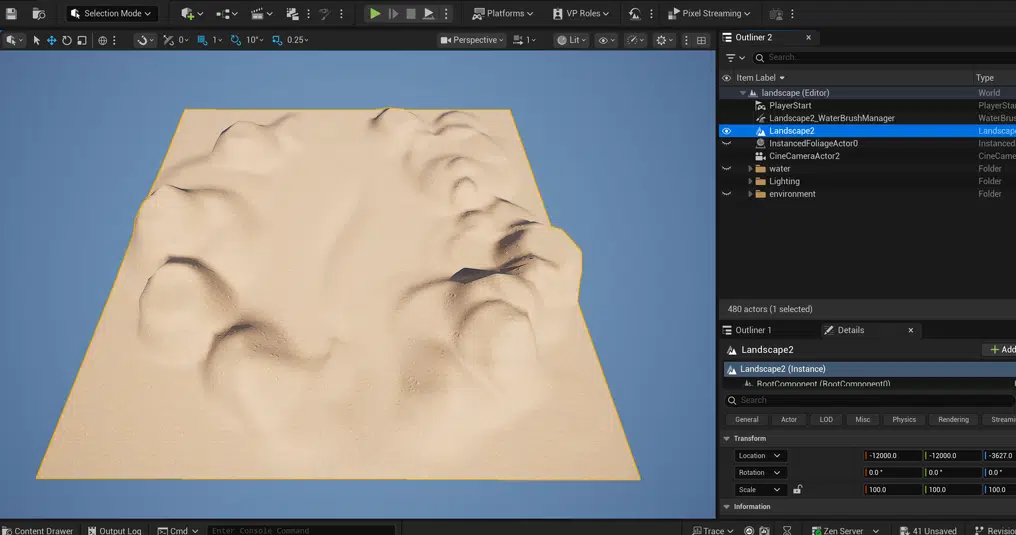
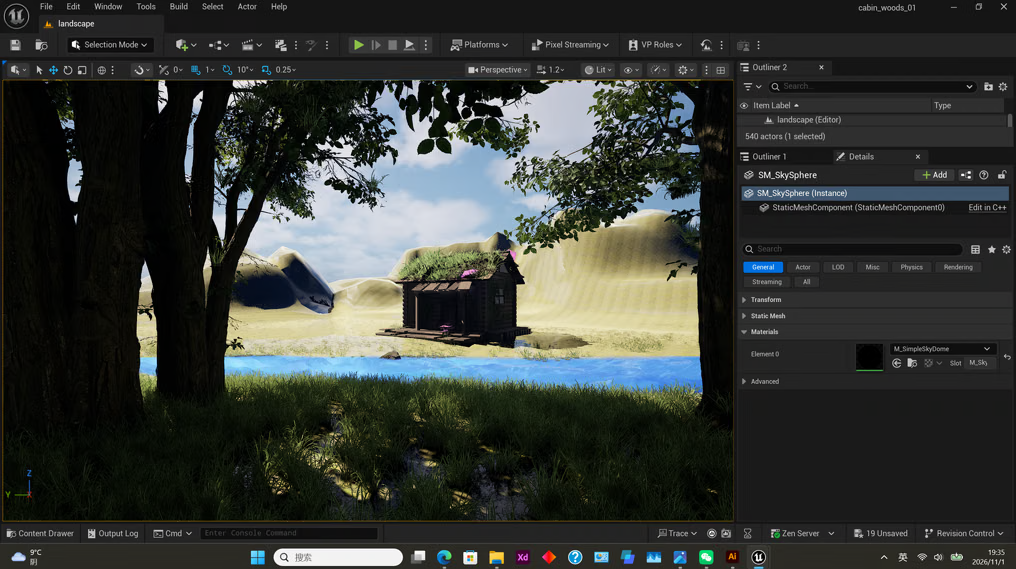
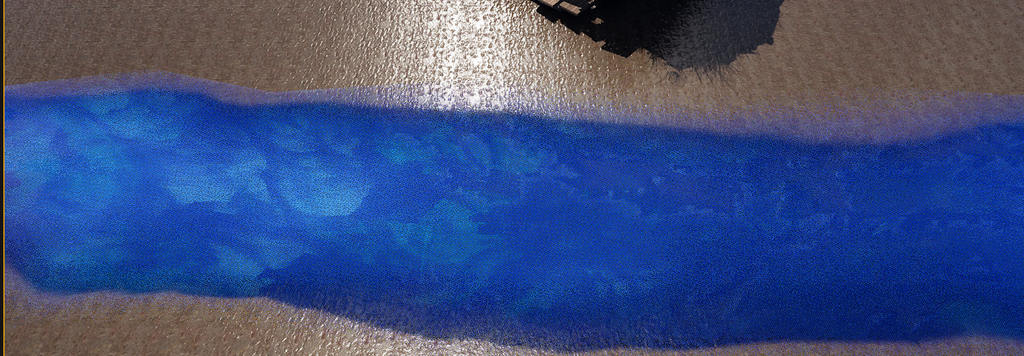
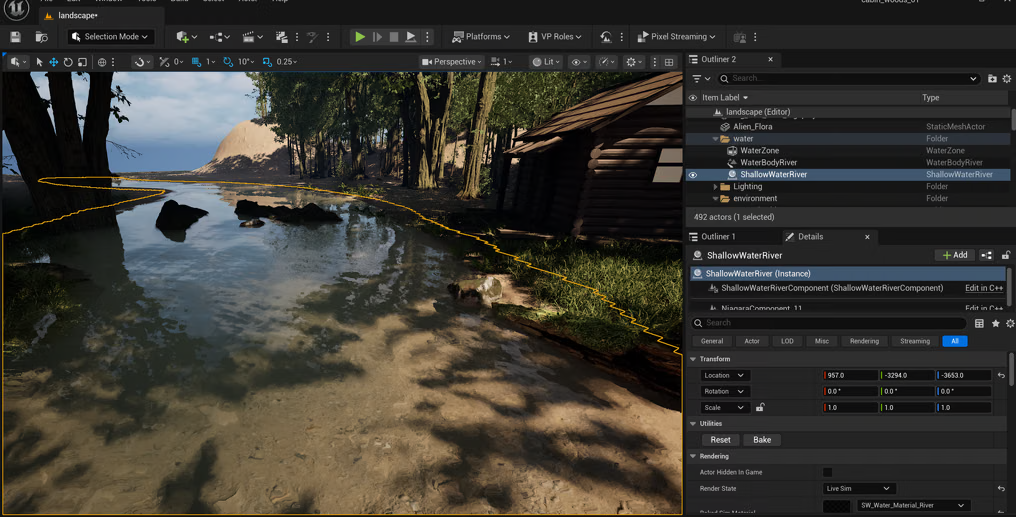
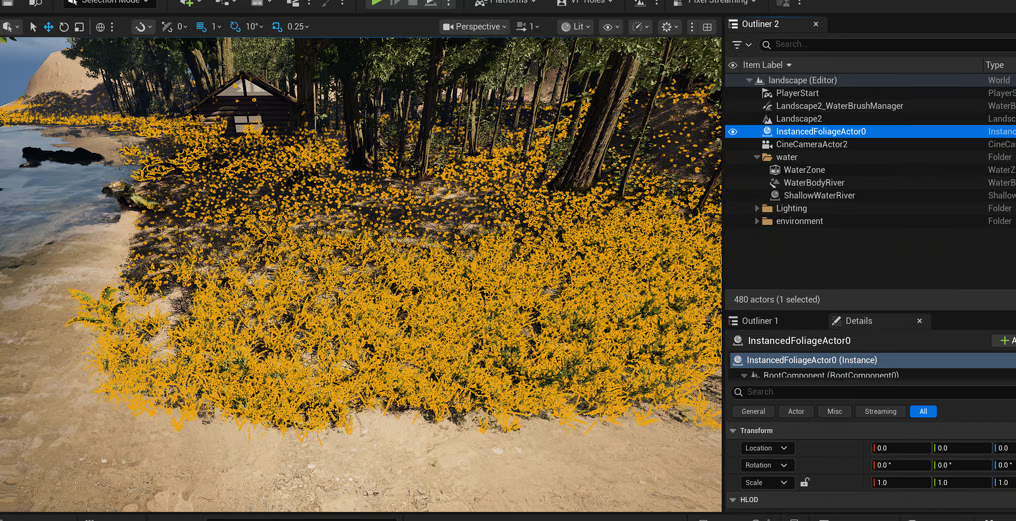
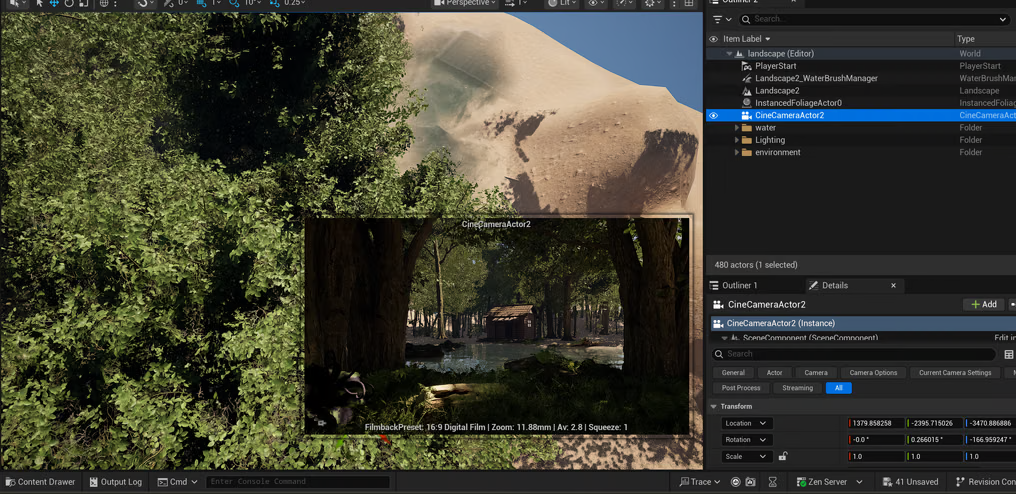
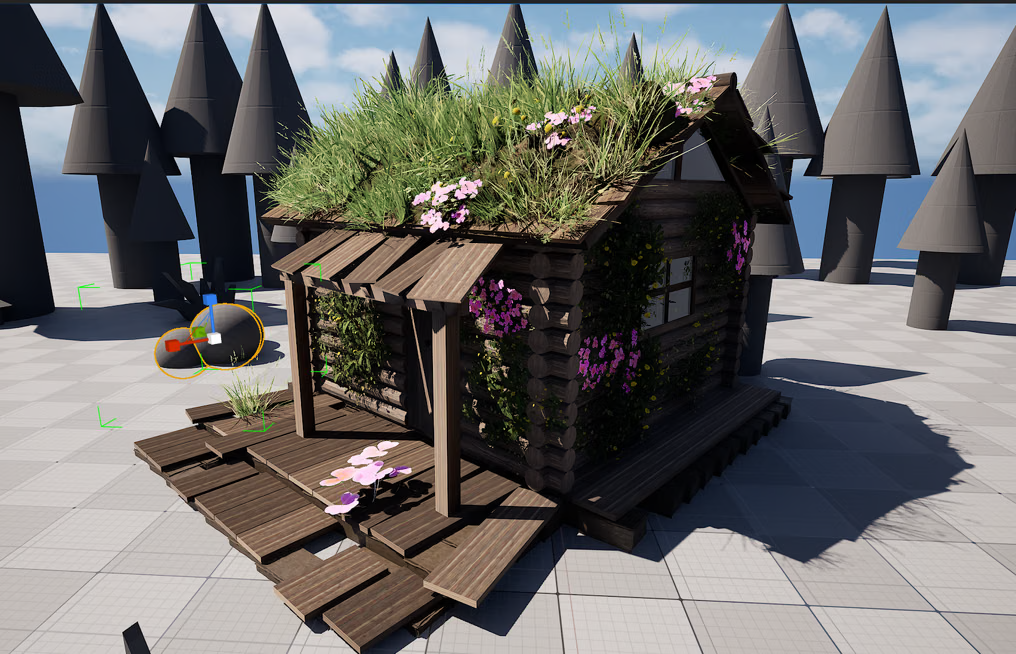
    After learning landscape creation in class, I created new landscape for the environment. When I first tried creating the water, I only used material nodes. The advantage was that the water looked very fluorescent and had a stronger sense of color, but the downside was that it did not look like water and it only have a tiny wave,which also made it inconsistent with the wooden house and the overall environment. After learning how to create water in class this week and reviewing the Shallow Water River tutorial after class, I rebuilt the water to make it look more realistic. However, I still need to continue adjusting the water color, as well as learn about and add fluorescent objects. Using the Foliage plant brush learned in class, I completed the general placement of the scene, set up the camera, and created multiple bookmarks to fix the viewing angles, making it easier to adjust lighting and camera angles later. At the same time, after finishing the placement of plants around the house last time, I noticed that the plant models were exploding when the camera distance changed. After rechecking the Foliage settings and the plant model resources, I found that the issue was caused by modifying the plant materials and not handling the displacement nodes properly. I deleted the roof plants that had already been placed and will add them again in the later stages of production.

  • Weekly reflection 3

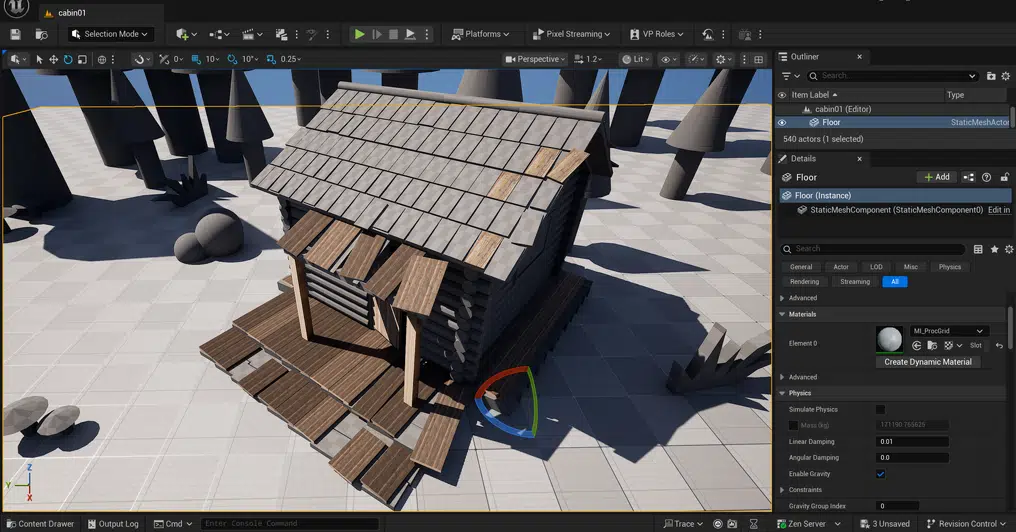
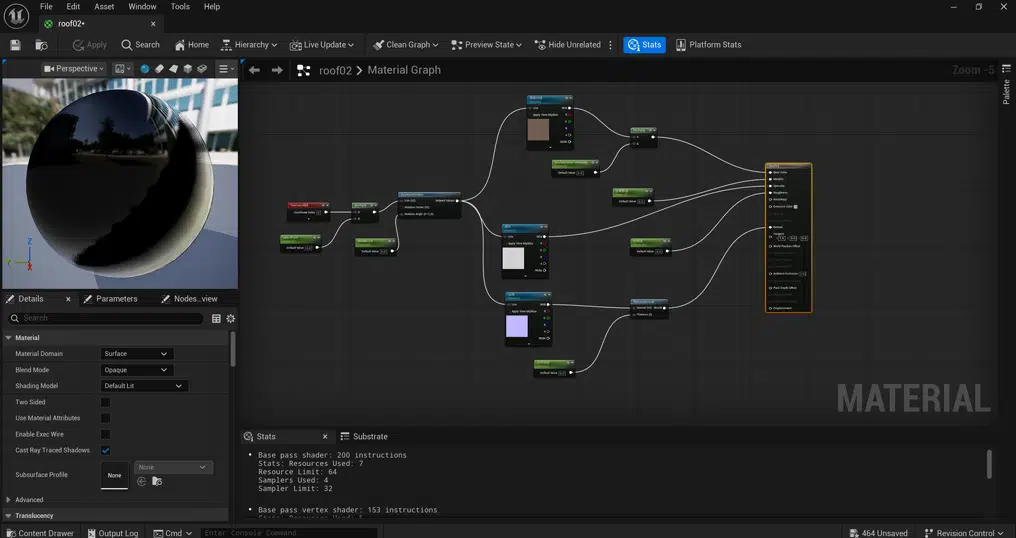
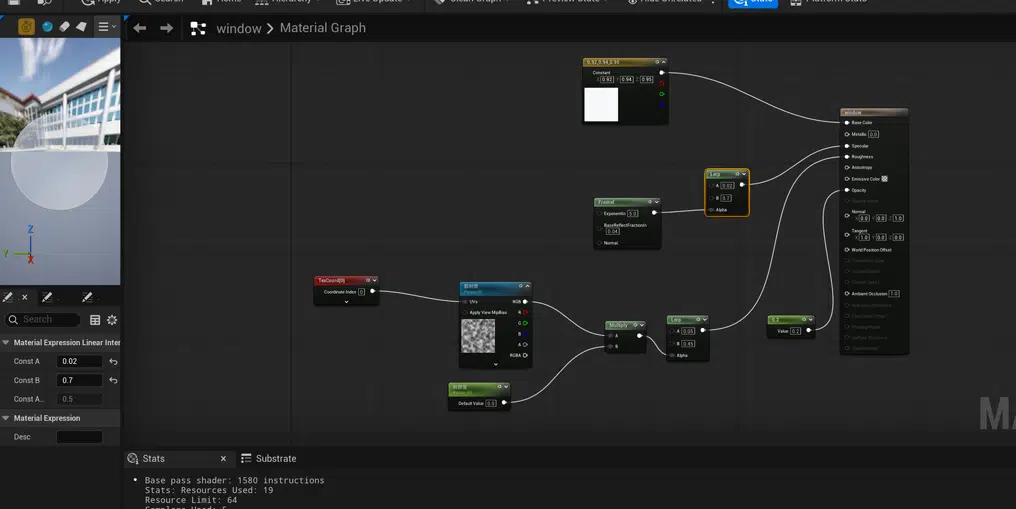
    This week, I completed the material setup for a wooden house using the Fab-imported model and adjusted material nodes, as well as added simple decorations with plants imported via Fab. During the material setup, I encountered issues such as node errors and missing model faces. Later, through online courses and AI-based knowledge searches, I identified the problems or found alternative nodes to resolve them. When decorating with Fab’s plant resources, I experimented with changing the colors of the plants, though further adjustments will be needed once the environment is fully set up.

  • Weekly Reflection 2

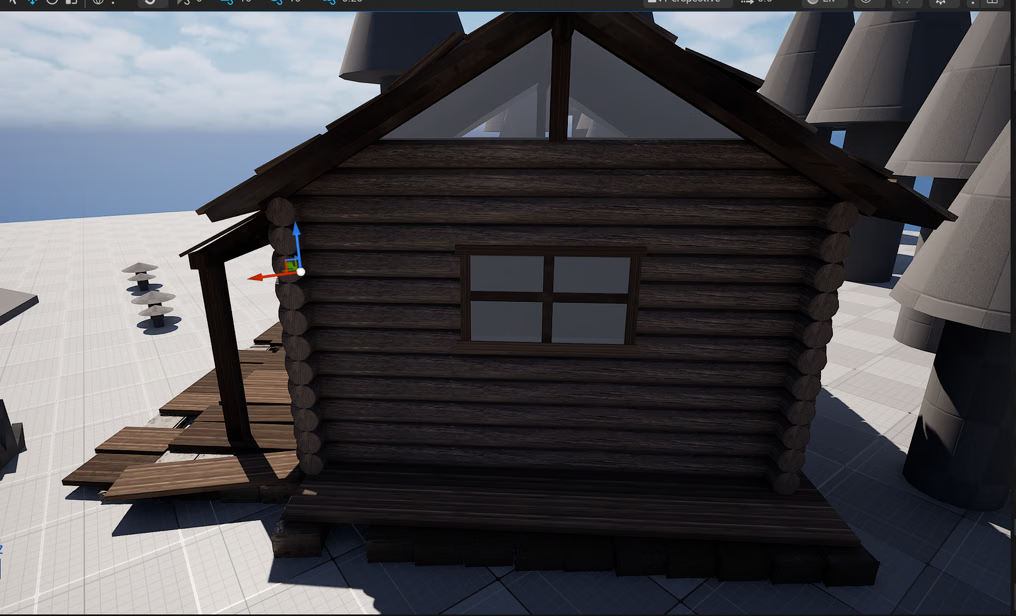
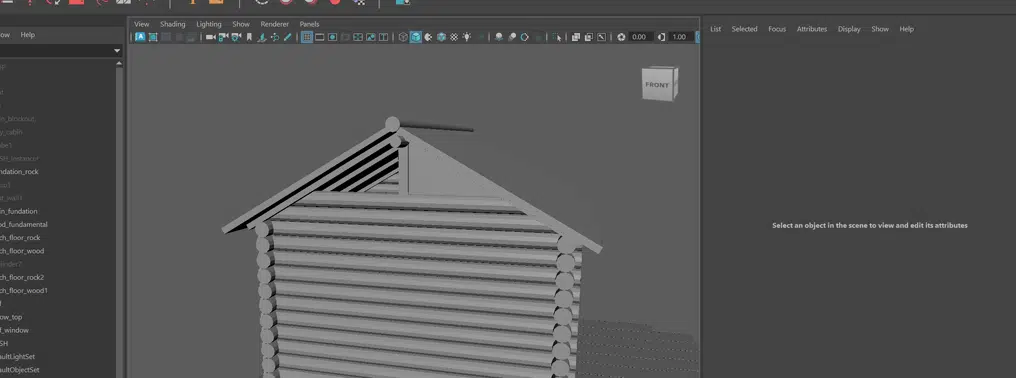
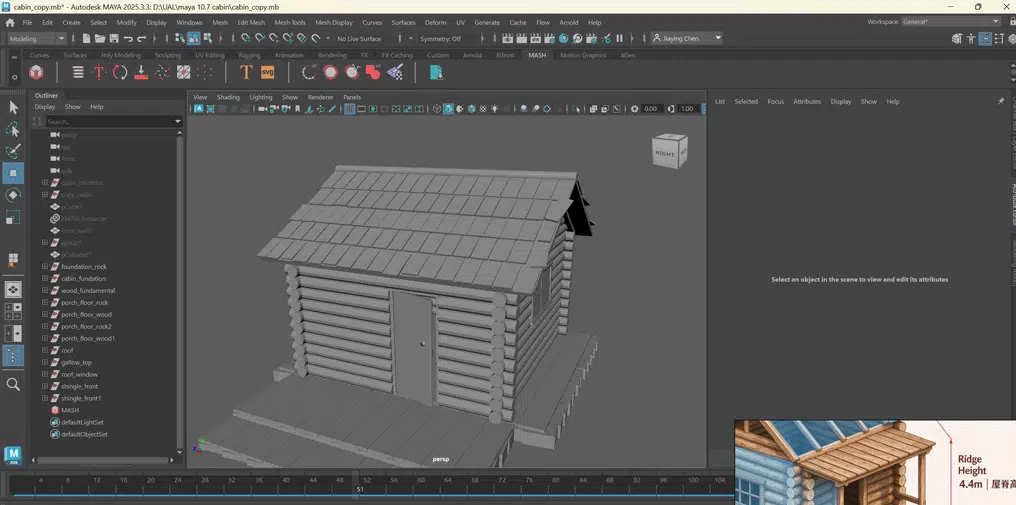
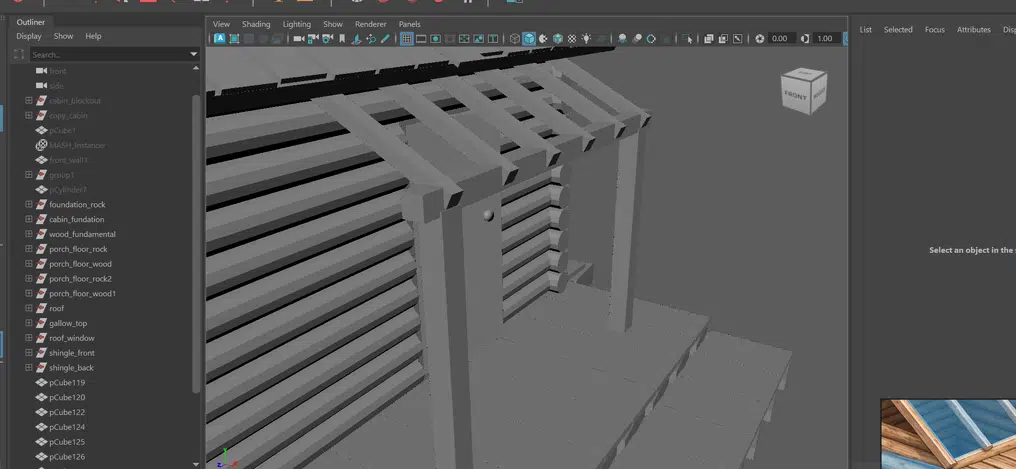
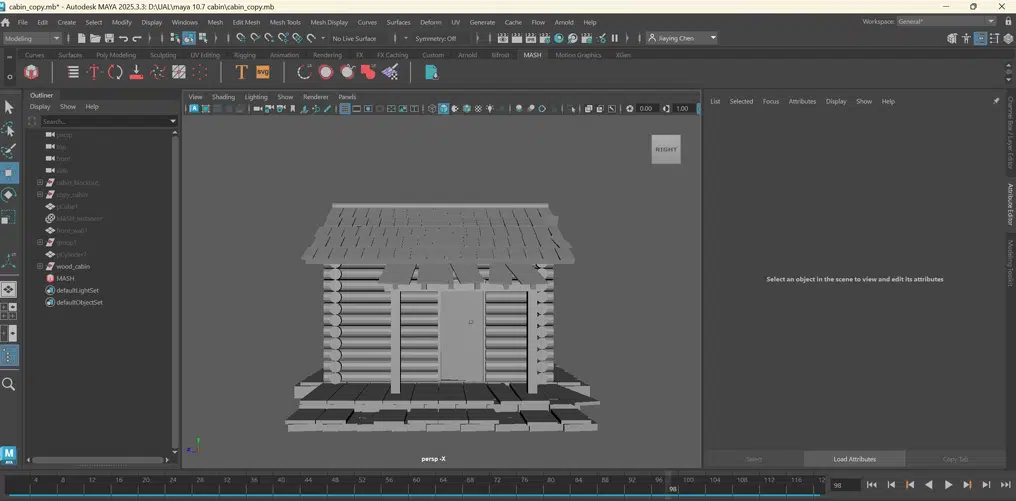
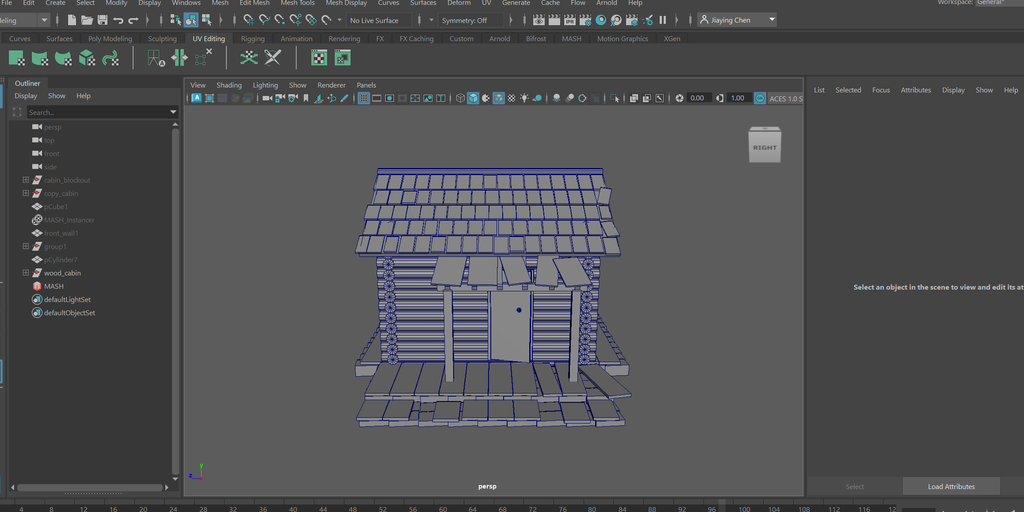
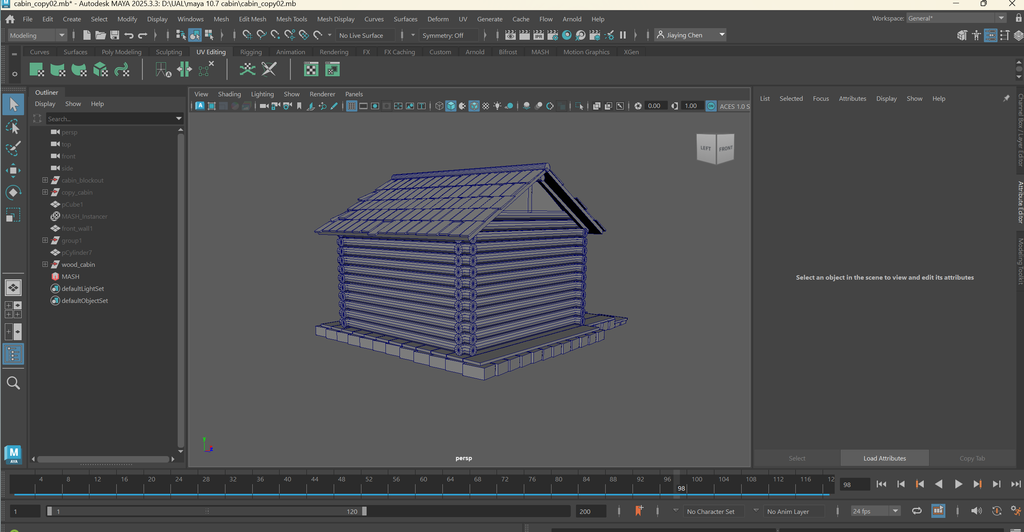
    This week, I improved my soft skills by enhancing my ability to troubleshoot issues. After further studying Maya software, I was able to independently identify and resolve problems using AI tools and online courses. I successfully completed the construction of a wooden house, during which I promptly detected and addressed issues such as dimensions and structural flaws.

  • Weekly Reflection 1

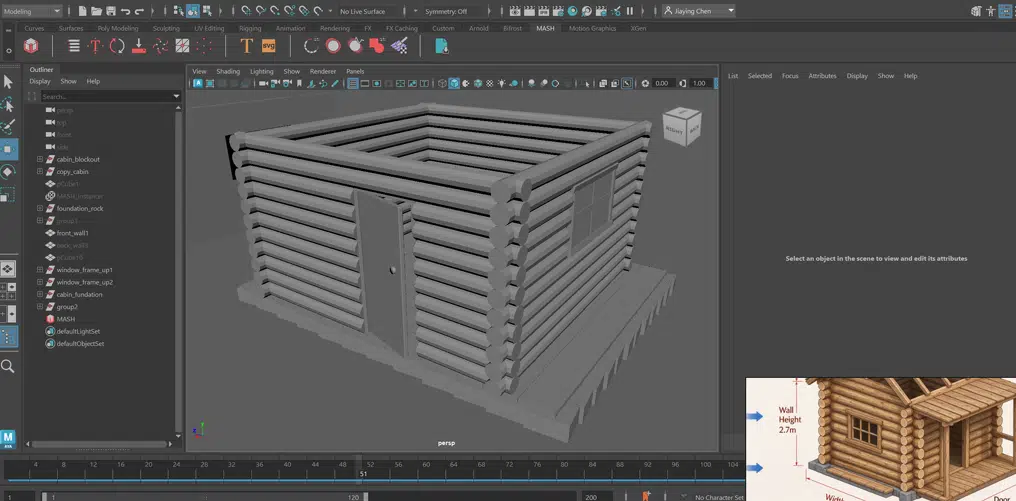
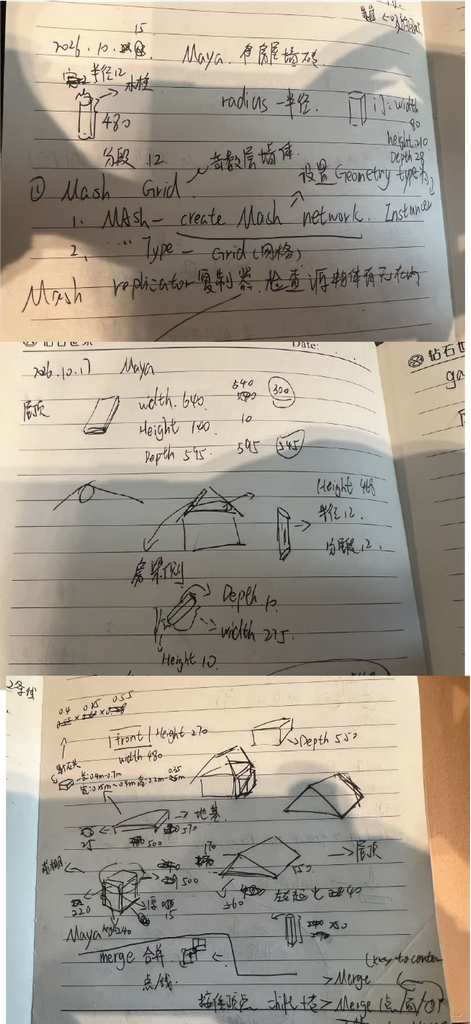
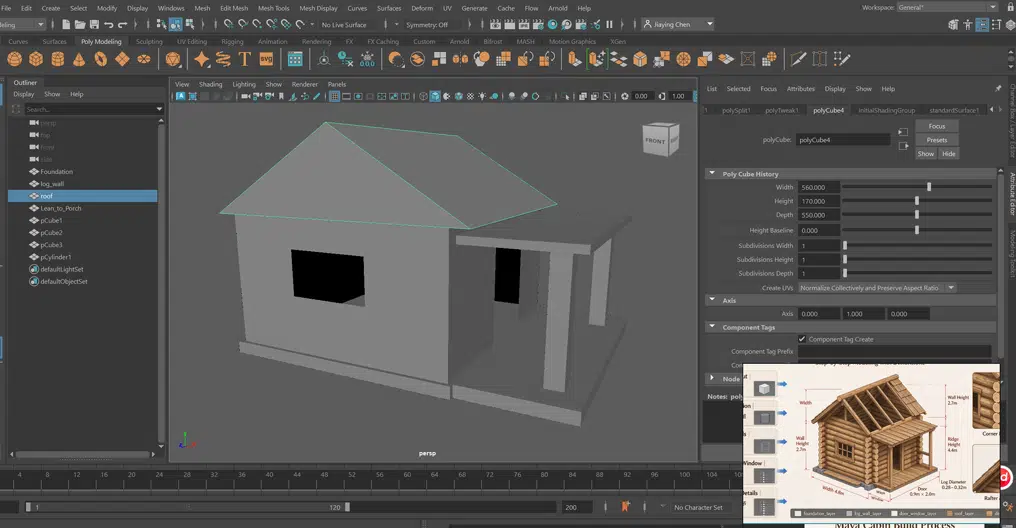
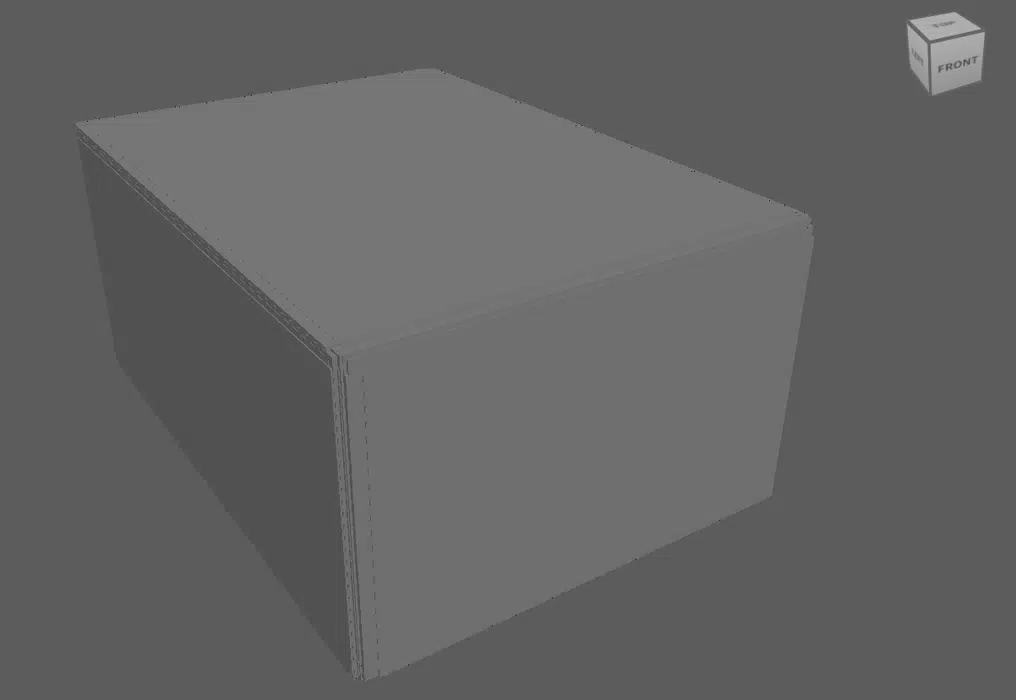
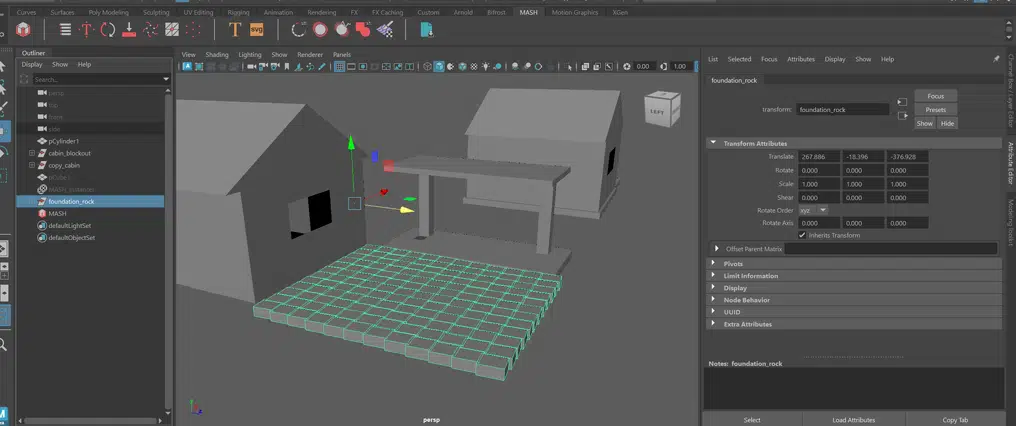
    Integrated with AI, specific parameters for cabin structure and size were defined. Using Maya, I attempted to construct a rough form through aggregation, studied Maya MASH to create broken cubes and matrices, and utilized the instancer and bake functions to convert instance arrays into independent models, facilitating texture mapping.

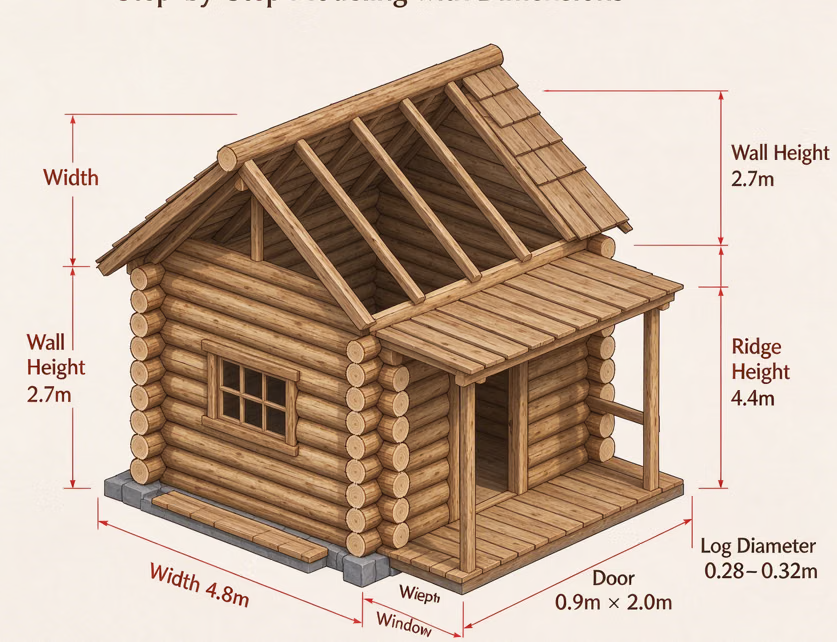
    I used Doubao AI to generate realistic reference renders based on my cabin sketch. It also helped me research standard dimensions and proportions for wooden cabins. I built the cabin blockout using the data from the AI, tested whether the measurements made sense during the blocking process, and revised any parts that were incorrect.

  • Pre production

    https://padlet.com/artslondon/my-luminous-sandbox-s023unecyq02t8vrla8f

    Hi! I’m Jiaying Chen, a Graphic Design undergraduate from Guangdong University of Foreign Studies. I completed one-and-a-half years of graphic design internships: one as a brand designer at a jewellery brand and another in book binding design at a publishing studio. During these graphic design internships, I gradually developed an interest in 3D visual art.I am fascinated by themes surrounding humans and the environment, such as diverse cultures shaped by their surroundings, as well as the relationships and evolving dynamics between people and nature, so I hope to center my future research and creative work on environmental themes.

    1. My Strongest Skills

    Soft Skills:Receiving and Implementing Feedback, Self-Motivation, Team-Working.

    Hard Skills:Adobe AI, PS, XD, C4D, ID.

    2. My Weakest Skills

    Soft Skills:Time and Project Management, Problem-Solving and Debugging, Technical Engagement.

    3.Action

    Pay more attention to details, and try to learn and solve problems on my own first when they arise.

    Create a task schedule and use it to motivate myself.

    I aim to first get to know these programs, practise their workflows and build up my 3D thinking.